La Galactapedia et la starmap de RSI : l'histoire, les peuples, les sociétés et les systèmes du 'Verse.
Textes officiels de RSI, en anglais.
913 articles
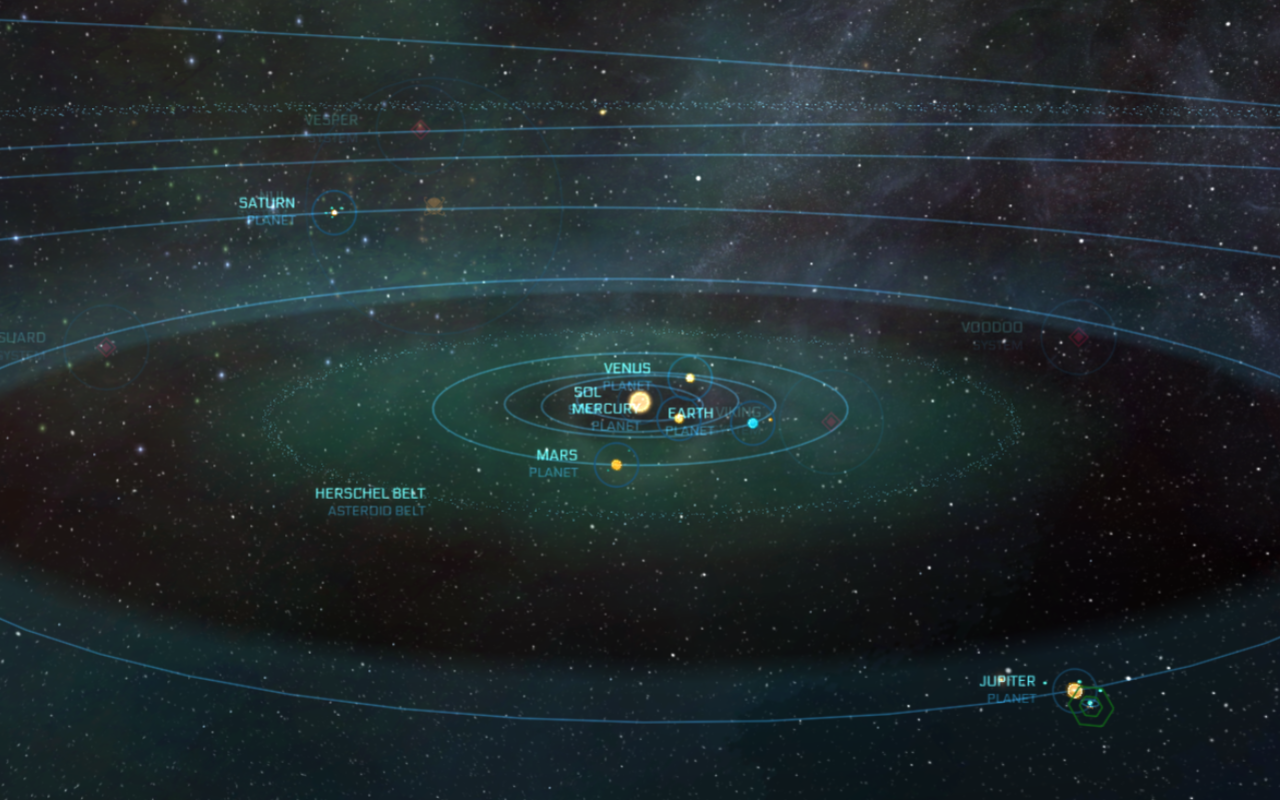
Sol System
Planetary Systems
The Sol system is a planetary system in the United Empire of Earth (UEE) that consists of a G-type main sequence star, one mesoplanet, three terrestrial planets, two gas giants, two ice giants, a dwarf planet, an asteroid belt, and many other celestial bodies. The original home…
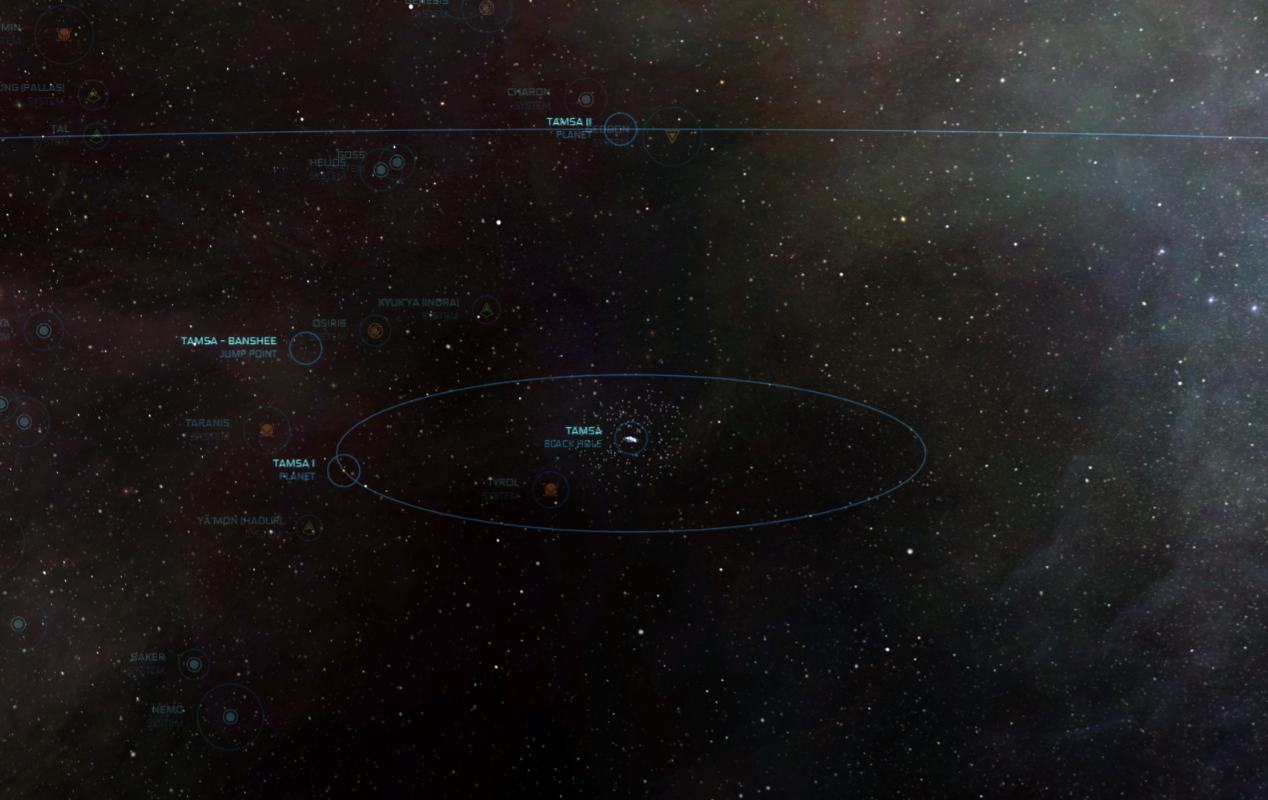
Tamsa System
Planetary Systems · Human
The Tamsa system is a planetary system in the United Empire of Earth (UEE). Uniquely among UEE systems, its two planets revolve around a black hole rather than a star. The innermost world is thought to have been a rogue planet before it was captured by the black hole, while the…
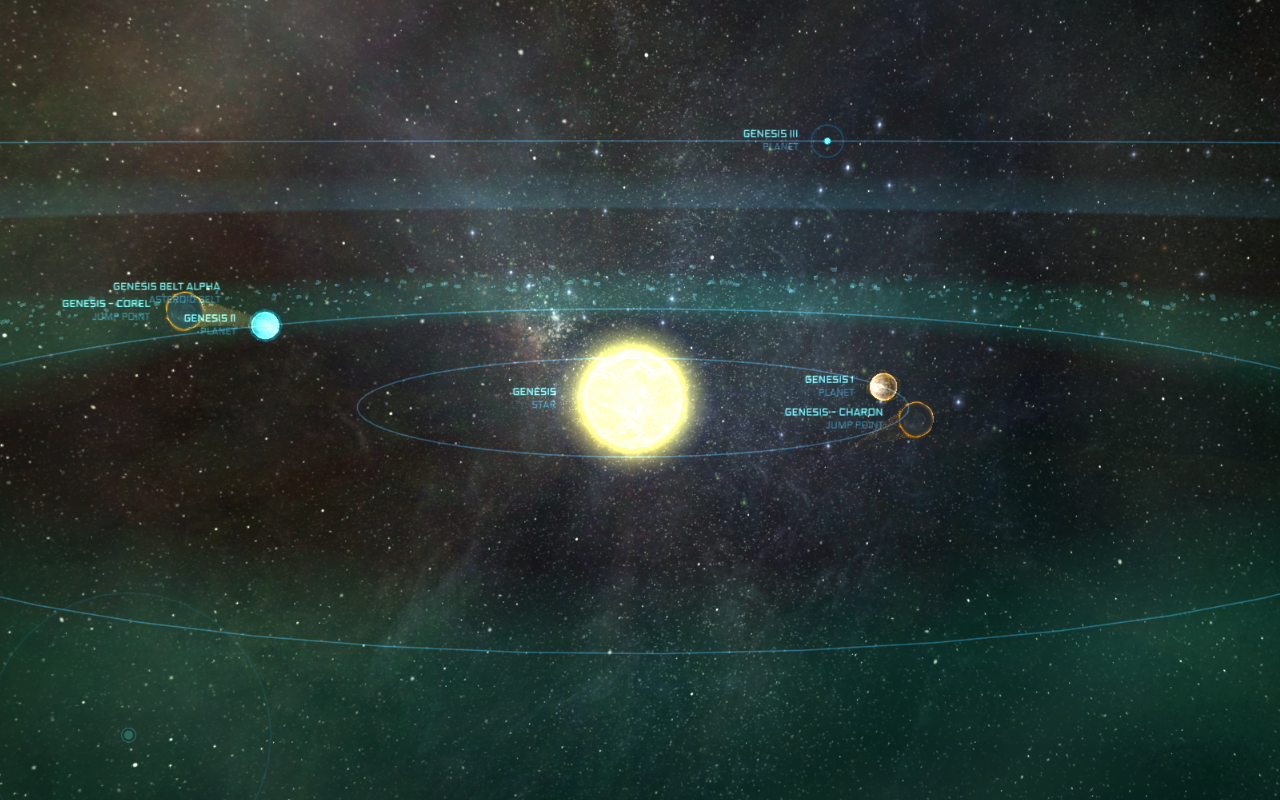
Genesis System
Planetary Systems
The Genesis system is a developing planetary system that consists of a G-type main sequence star, a mesoplanet, a terrestrial planet, an ice giant, and an asteroid belt. Discovered in SEY 2812, it was immediately evident that the second planet from the sun was lush with…
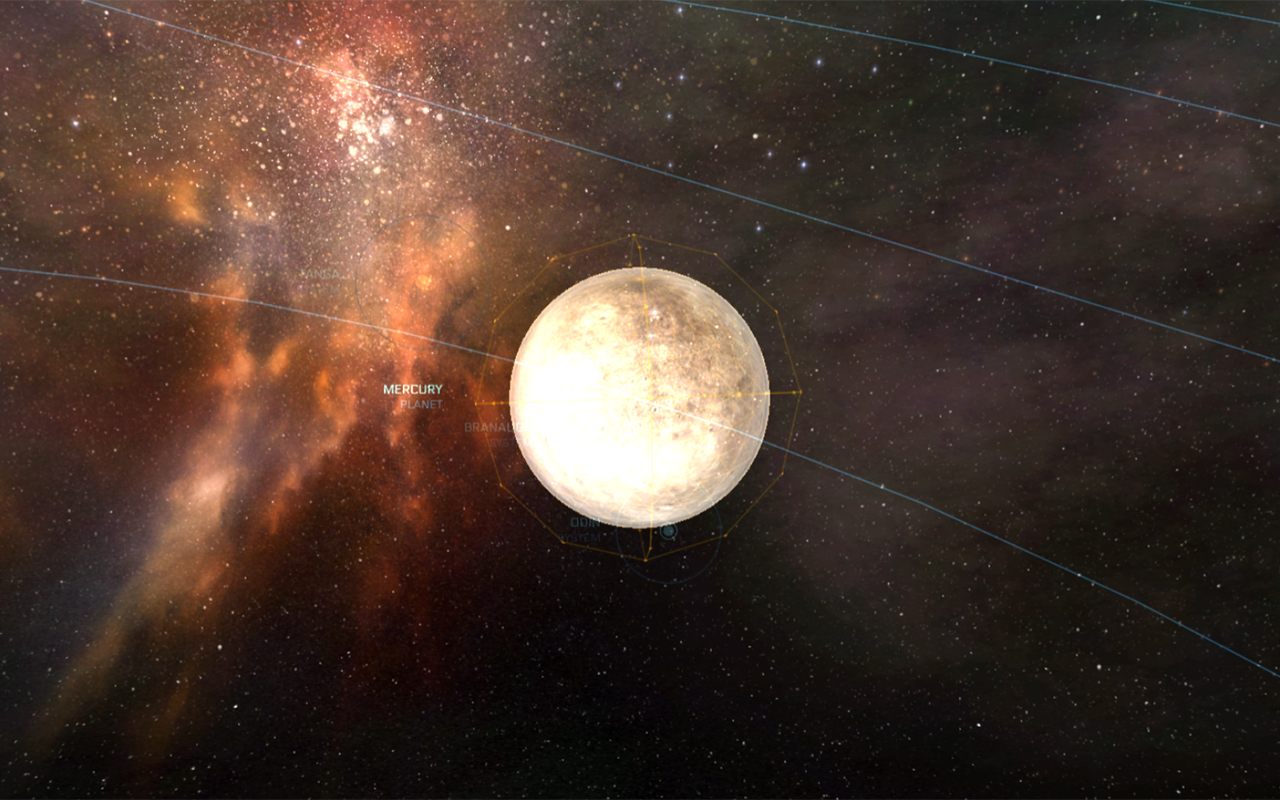
Mercury (Sol I)
Planets
Mercury (Sol I) is the first planet from the sun of the Sol system, United Empire of Earth (UEE). An iron planet, has been extensively mined and stripped of most of its natural resources. When Humans first began mining planets other than their homeworld Earth (Sol III), hundreds…
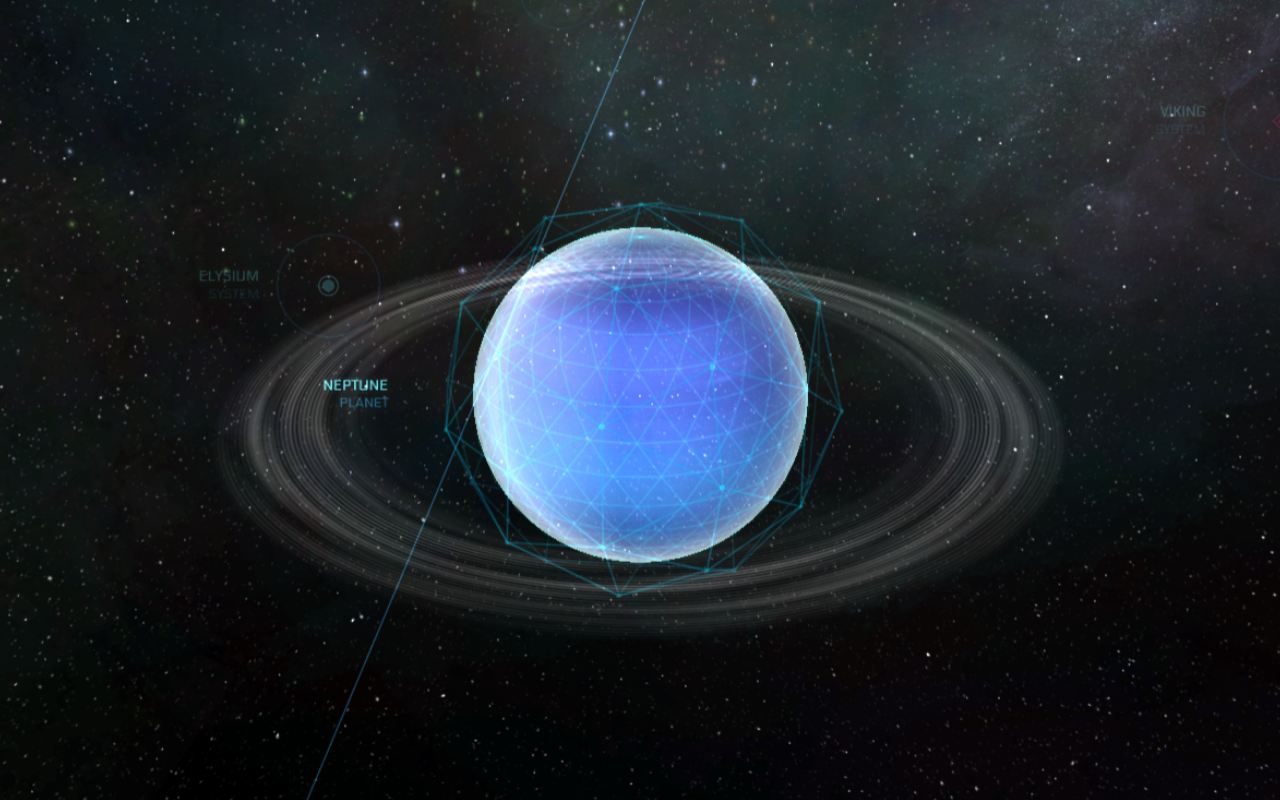
Neptune (Sol VIII)
Planets
Neptune (Sol VIII) is the eighth planet from the sun of the Sol system, United Empire of Earth (UEE). The densest of the Sol system's gas and ice giant planets, its atmosphere contains high proportions of ice and traces of hydrocarbons. Roughly every two-and-a-half centuries…
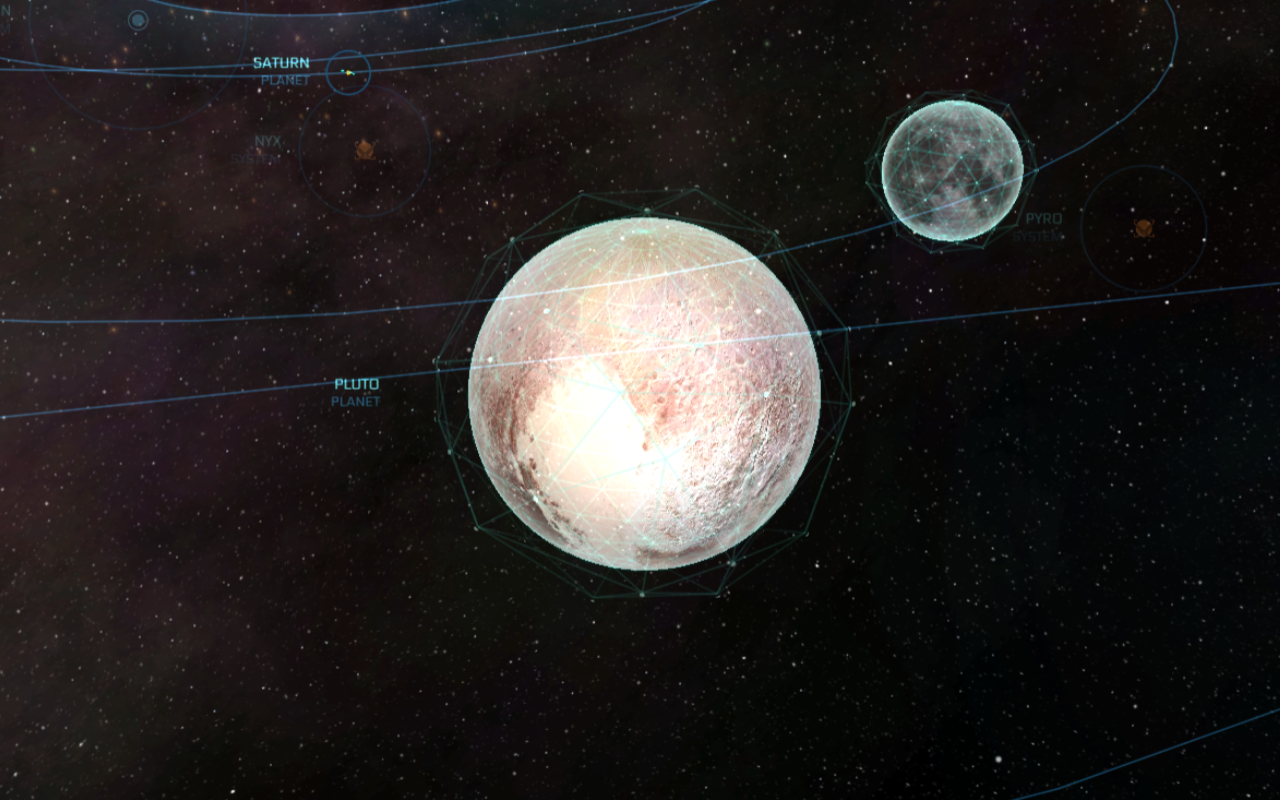
Pluto (Sol IX)
Planets
Pluto (Sol XI) is a dwarf planet and one of the farthest celestial bodies from the sun of the Sol system, United Empire of Earth (UEE). Not the most distant object, it is included as an honorary ninth planet in star charts due to its relative proximity to the Croshaw-Sol jump…
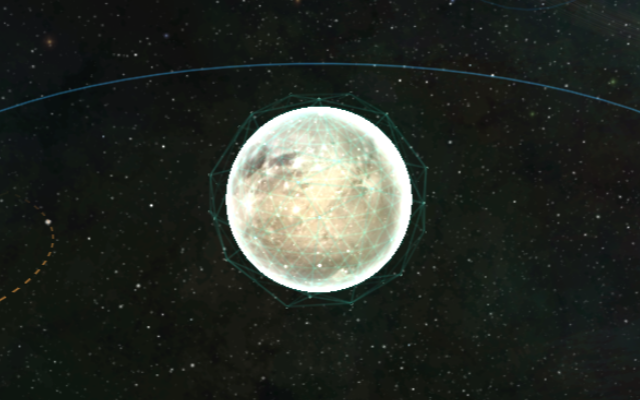
Ganymede (Sol 5c)
Moons
Ganymede (Sol 5c) is a moon of Jupiter (Sol V), United Empire of Earth (UEE). The largest moon in the Sol system, its diameter is greater than that of the planet Mercury (Sol I). Before Ganymede's subsurface ocean was explored in the 25th century SEY, it was popularly speculated…
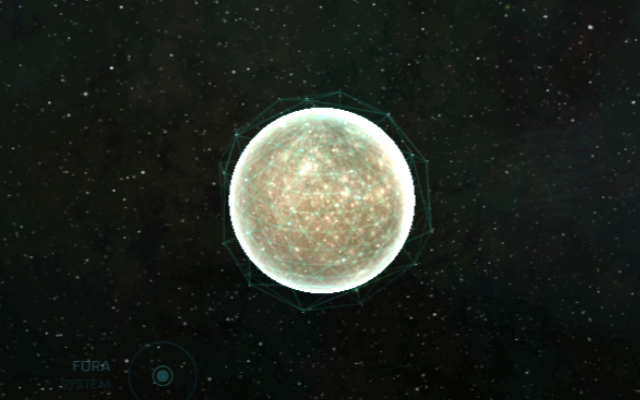
Callisto (Sol 5d)
Moons
Callisto (Sol 5d) is a moon of Jupiter (Sol V), United Empire of Earth (UEE). Of all the celestial bodies in the Sol system, Callisto's surface is the most heavily cratered. Because it has never been geologically active, it is home to multiple sealed settlements and a handful of…
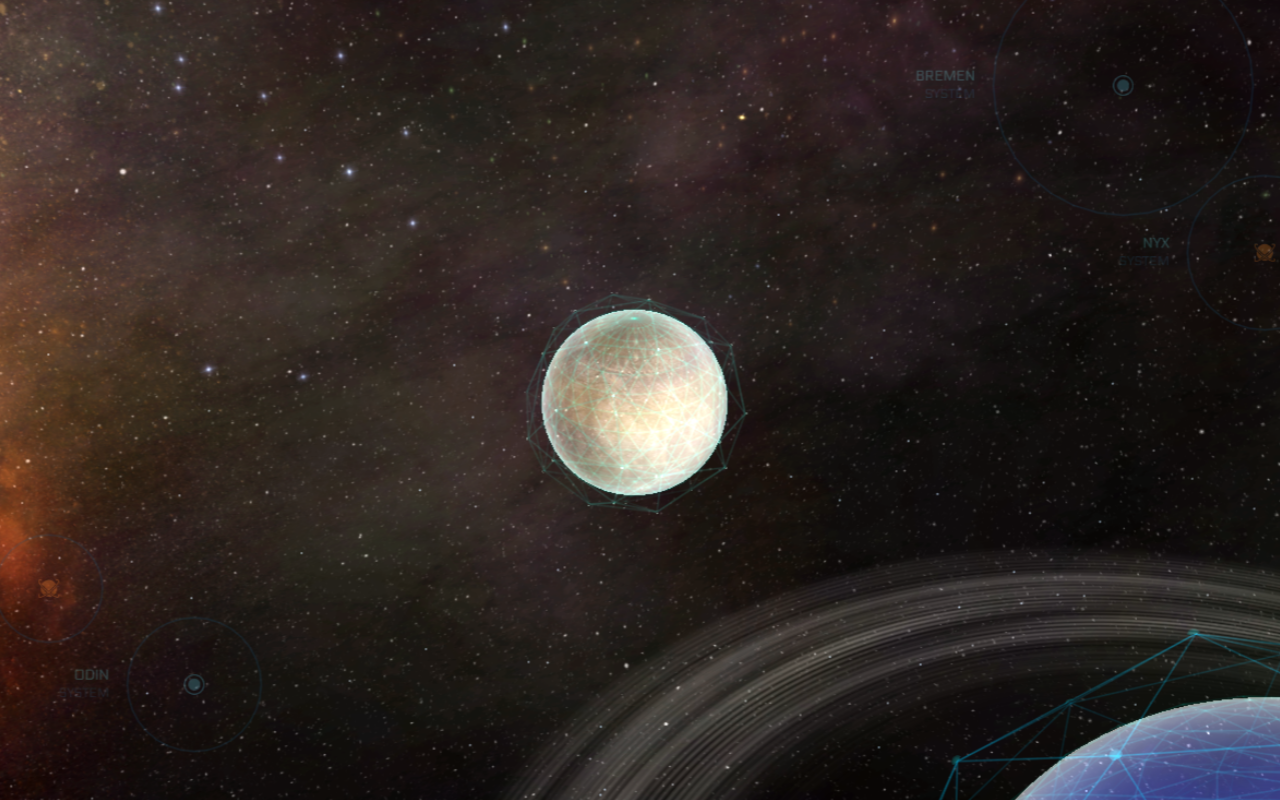
Triton (Sol 8a)
Moons
Triton is a moon of Neptune (Sol VIII), United Empire of Earth (UEE). The largest of Neptune's moons, it the planet's only natural satellite massive enough to have achieved gravitational rounding. Additionally, even though it is a moon, it is larger than all other dwarf planets…
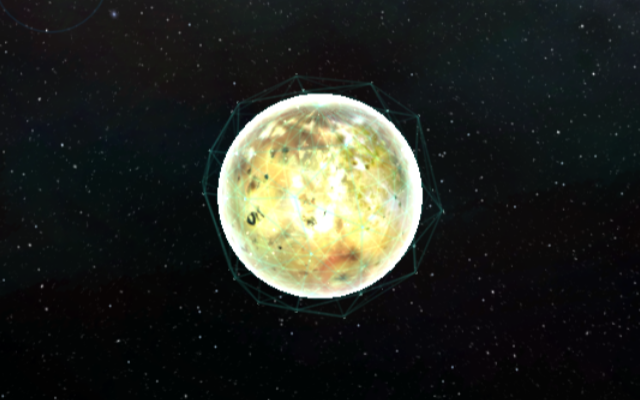
Io (Sol 5a)
Moons
Io (Sol 5a) is a moon of Jupiter (Sol V), United Empire of Earth (UEE). Due to tidal heating and the presence of a subsurface ocean of molten and solid rock, Io is the most geologically active object in the Sol system. Armor manufacturer Caldera utilizes the surface of Io as a…
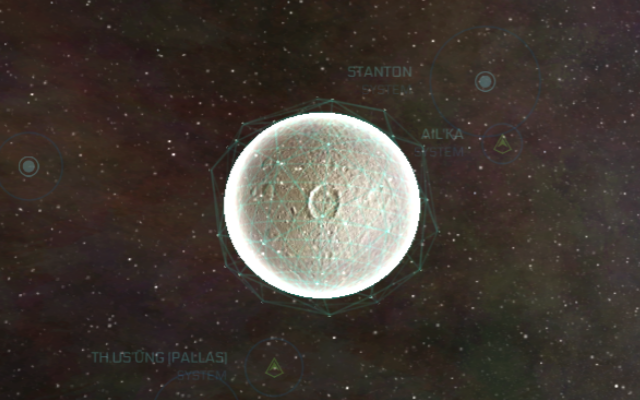
Tethys (Sol 6c)
Moons
Tethys (Sol 6c) is a moon of Saturn (Sol VI), United Empire of Earth (UEE). One of the least dense of all the major moons in the Sol system, it is made almost entirely of water ice. Due to tidal and rotational forces, it is not quite round, taking a slightly elliptical shape.…
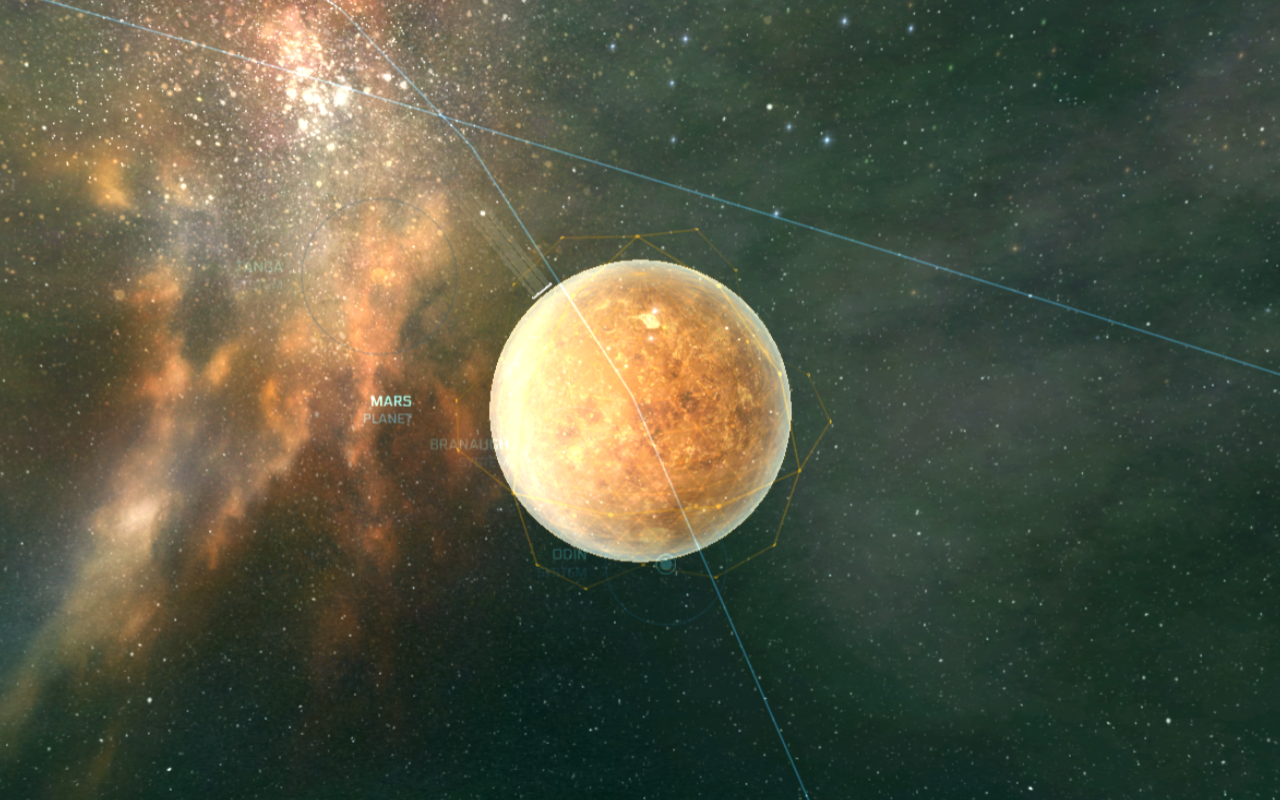
Mars (Sol IV)
Planets
Mars (Sol IV) is the fourth planet from the sun of the Sol system, United Empire of Earth (UEE). Populous and prosperous, it was the first planet Humans successfully terraformed after a disastrous initial attempt and provided a much needed outlet for their population during a…
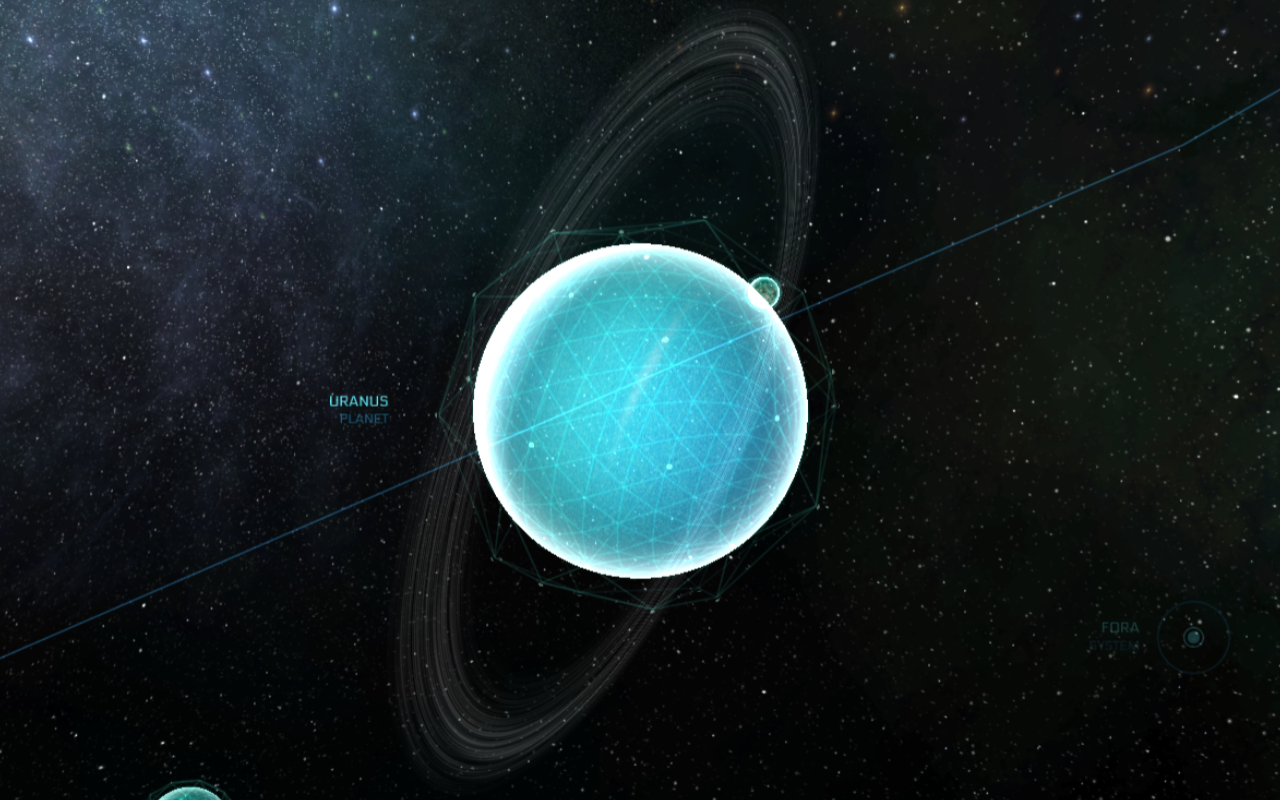
Uranus (Sol VII)
Planets
Uranus (Sol VII) is the seventh planet from the sun of the Sol system, United Empire of Earth (UEE). Pale blue in color, it is an ice giant with an atmosphere that is made mostly of water, ammonia, and methane. The UEE government runs orbital research centers dedicated to the…
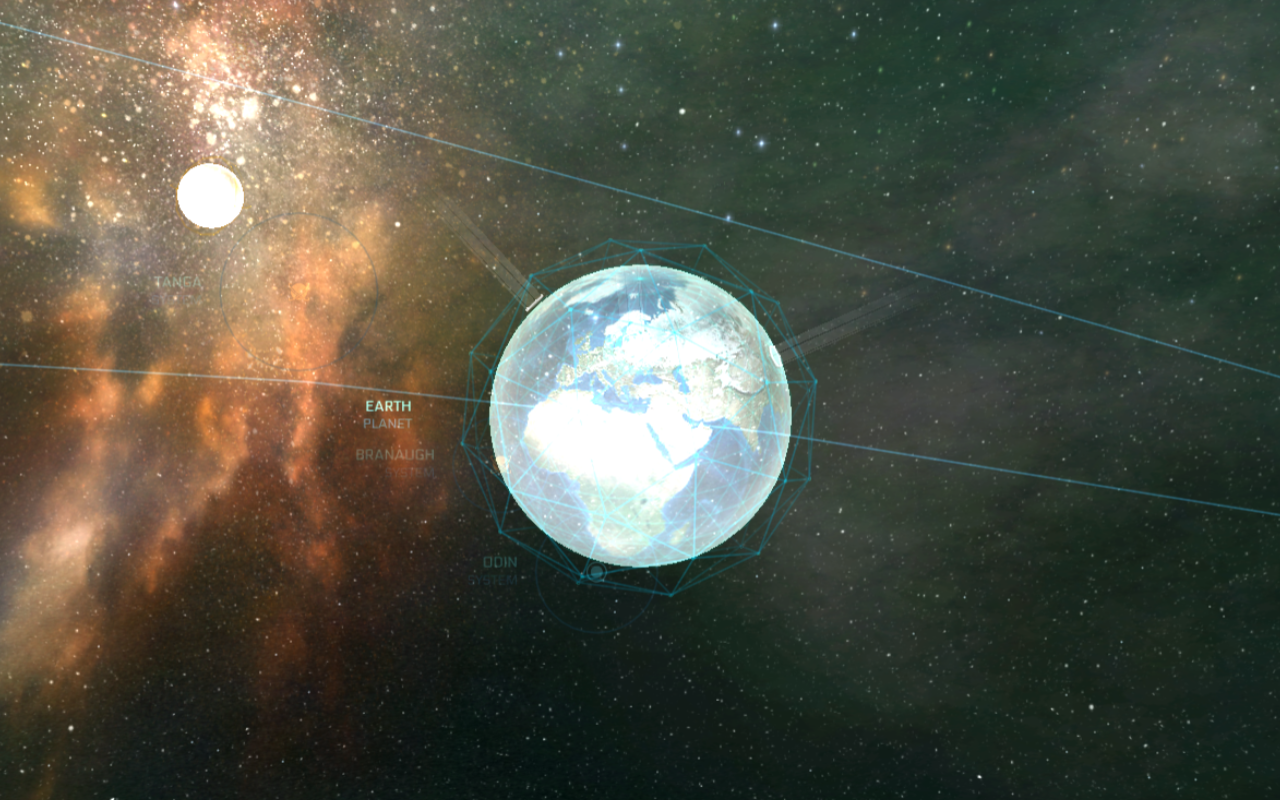
Earth (Sol III)
Planets · Human
Earth (Sol III) is the third planet from the sun of the Sol system, United Empire of Earth (UEE). The homeworld of Humans, it is the home of the Senate and the Imperator, the capital of the UEE, and the focal point of commerce and culture. Corporations and governments stripped…

System
Space
The term system is most frequently used by Humans as shorthand for planetary system, the grouping of all planetary bodies and other satellites that orbit a given star. The planets of a particular planetary system are by default given the name of the star itself followed by a…

Oberon (Sol 7e)
Moons
Oberon (Sol 7e) is a moon of Uranus (Sol VII), United Empire of Earth (UEE). Slightly red in color, it likely obtained its hue from the accretion of materials from other parts of the Uranus system. Meteorite impacts have also knocked ice from the surface, leaving dark, non-ice…
Dione (Sol 6d)
Moons
Dione (Sol 6d) is a moon of Saturn (Sol VI), United Empire of Earth (UEE). Marked with numerous impact craters and chasmata, it is theorized that Dione went through a period of heavy meteor strikes in the distant past that turned the moon 180 degrees on its axis. After the…
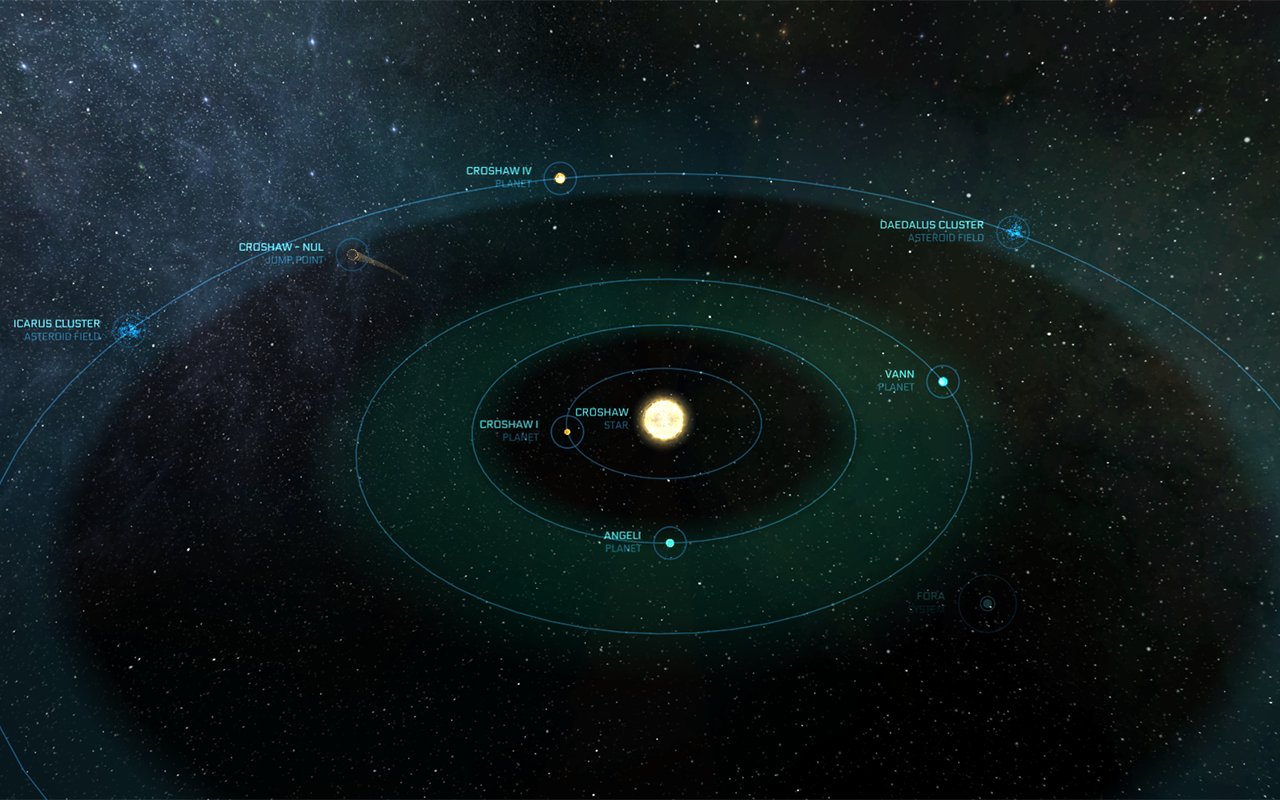
Croshaw System
Planetary Systems · Human
The Croshaw system is a planetary system in the United Empire of Earth (UEE). Discovered in SEY 2271 by Nick Croshaw, it was the first planetary system explored and colonized by Humans outside of their home system Sol. Private companies initially tried to lay claim to the…
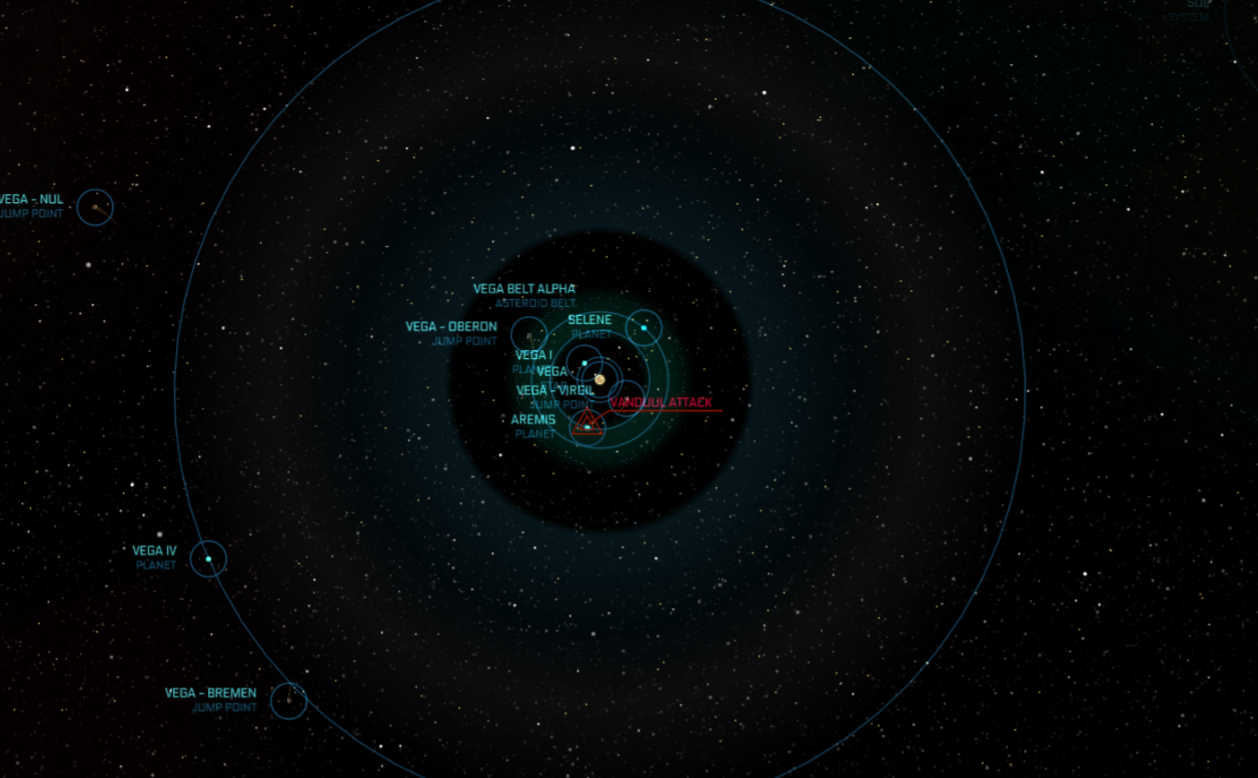
Vega System
Planetary Systems · Human
VEGA SYSTEM The Vega system is a planetary system in the United Empire of Earth (UEE). It consists of one mesoplanet, two terrestrial planets, one gas giant, one asteroid belt, and a G-type main sequence star. It was discovered in SEY 2402 and colonized only seven years later,…
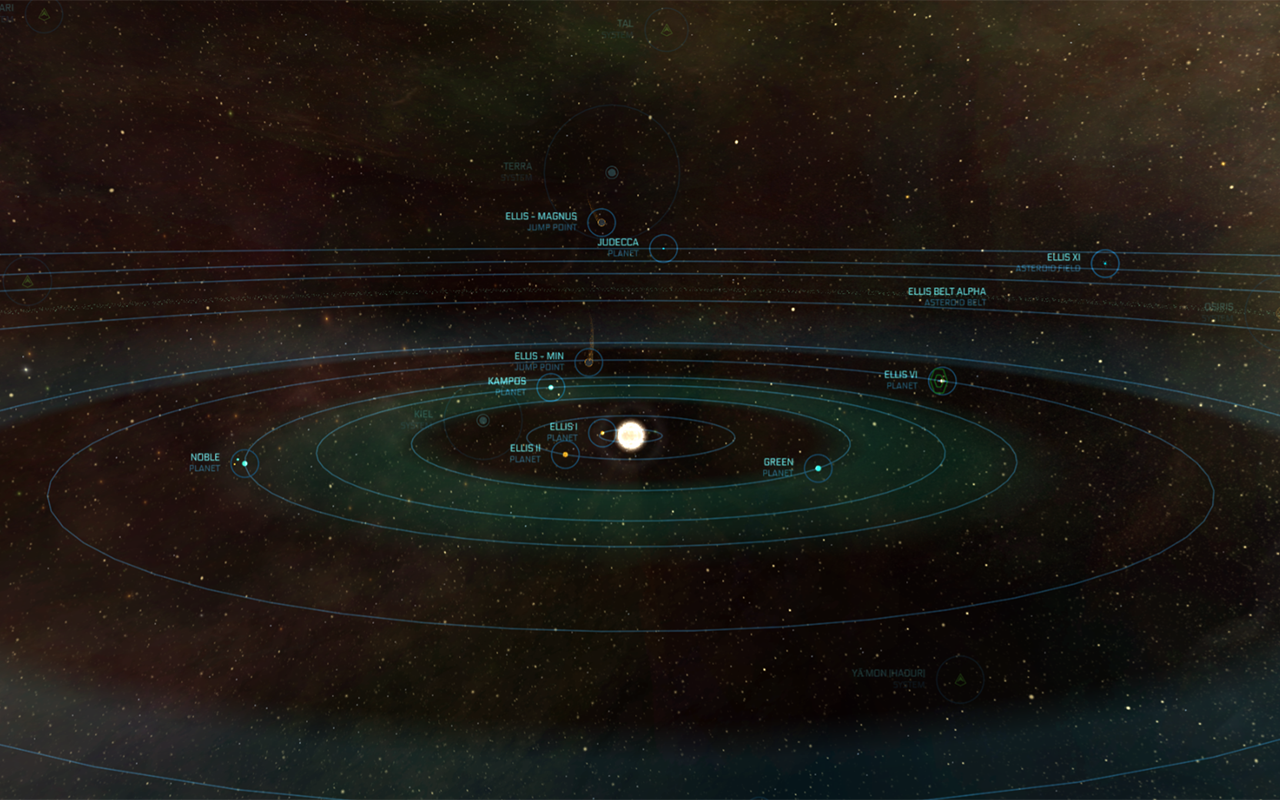
Ellis System
Planetary Systems · Human
The Ellis system is a planetary system located in the United Empire of Earth (UEE) that consists of thirteen planets, one asteroid belt, and one F-type main sequence star. Most famously home to annual spacecraft race the Murray Cup, its three habitable planets are all centers of…
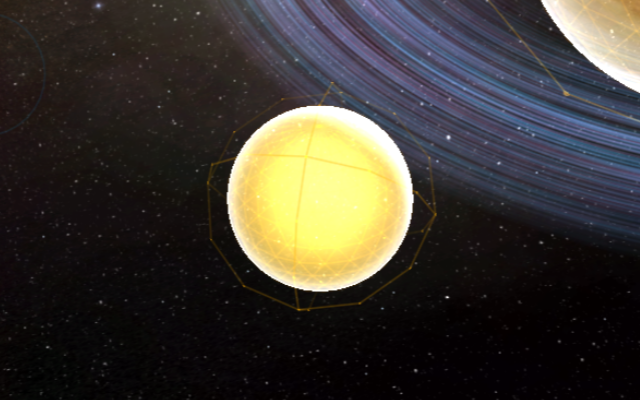
Titan (Sol 6a)
Moons
Titan (Sol 6a) is a moon of Saturn (Sol VI), United Empire of Earth (UEE). The largest of Saturn's moons, its nitrogen-methane atmosphere is denser than that of Earth (Sol III). Titan is dotted with lakes and rivers of liquid hydrocarbons, and its climate has created surface…
Miranda (Sol 7a)
Moons
Miranda (Sol 7a) is a moon of Uranus (Sol VII), United Empire of Earth (UEE). Round and tidally locked, it has an unusually high orbital inclination that suggests in the past that it was in orbital resonance with Umbriel (Sol 7c) for a period of time. Although massive enough to…
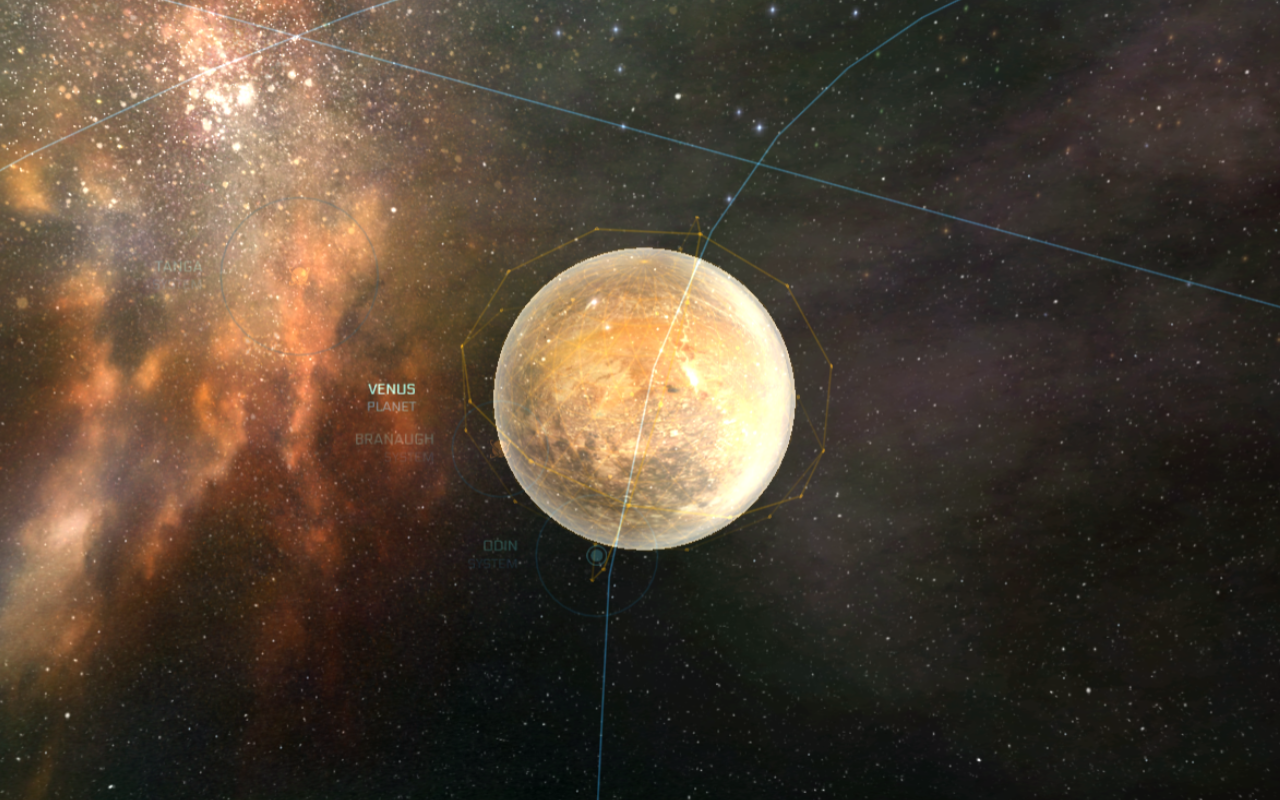
Venus (Sol II)
Planets
Venus is the second planet from the sun of the Sol system, United Empire of Earth (UEE). A smog planet with a dense, high-pressure atmosphere, it has never been successfully terraformed although Humans have made countless attempts since they first began terraforming other…

Titania (Sol 7d)
Moons
Titania (Sol 7d) is a moon of Uranus (Sol VII), United Empire of Earth (UEE). The largest of Uranus' moons, its surface is scored with enormous canyons and scarps. Under its surface is a mantle of slushy ice that sits over a solid rocky core. It has a tenuous atmosphere of…
Source : Galactapedia et starmap de RSI, via l'API du Star Citizen Wiki.
