La Galactapedia et la starmap de RSI : l'histoire, les peuples, les sociétés et les systèmes du 'Verse.
Textes officiels de RSI, en anglais.
807 articles

UEE Navy
Human · Military
The United Empire of Earth (UEE) Navy is the largest branch of the UEE's armed forces. It is responsible for the operation of capital spacecraft, support ships, and fighters and the maintenance thereof. The UEE Navy is headed by the Legatus Navium, who represents the branch in…

UEE Army
Military · Human
The United Empire of Earth (UEE) Army is the branch of the UEE military responsible for land-based military operations. Headquartered on Earth (Sol III), It was founded alongside the UEE Navy in SEY 2380 as a part of the creation of the United Nations of Earth (UNE). The Army is…
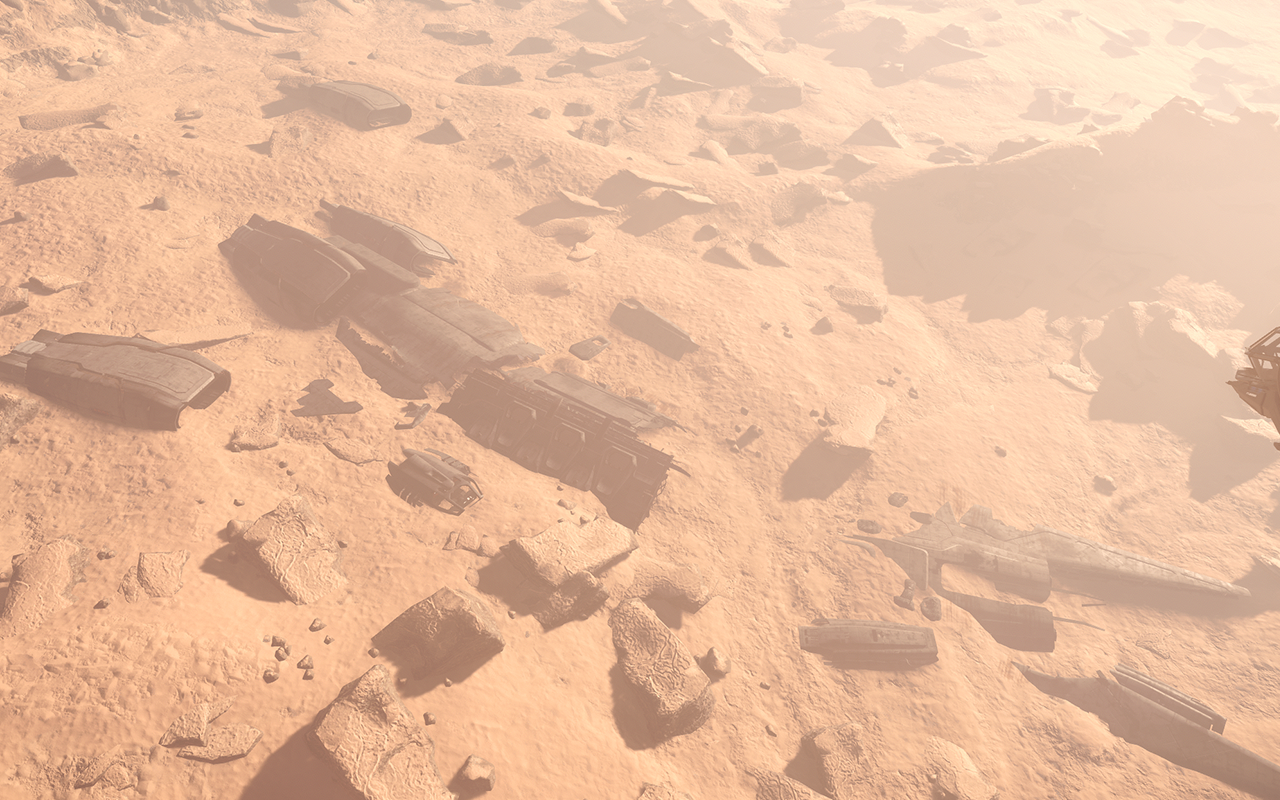
UEES Flyssa
Spacecraft · Military · Human
The UEES Flyssa was a Javelin-class destroyer that crashed on the surface of Daymar (Stanton 2b) in SEY 2862 and was last commanded by Captain Chin Ormiston of the United Empire of Earth (UEE) Navy. Launched in 2779 after a three year construction process, it was initially used…

UEE Marines
Military · Human
The United Empire of Earth (UEE) Marines are the infantry branch of the UEE armed forces. They specialize in planetary invasion and special operations, along with the support of land and space operations. Once a division of the UEE Army, they were granted their own branch in SEY…

Ariel (Sol 7b)
Moons
Ariel (Sol 7b) is a moon of Uranus (Sol VII), United Empire of Earth (UEE). Scientists speculate that the many scarps, canyons, and ridges carved into the moon's surface were created in the distant past by liquid forms of ammonia, methane, or carbon dioxide. The UEE operates…

UEE Calendar
Human · Culture
The United Empire of Earth (UEE) calendar (Standard Earth Year, SEY) is a system of time measurement that is based on the celestial mechanics of the Human homeworld, Earth (Sol III). The year is charted by how long it takes Earth to revolve around the system's sun, and each day…
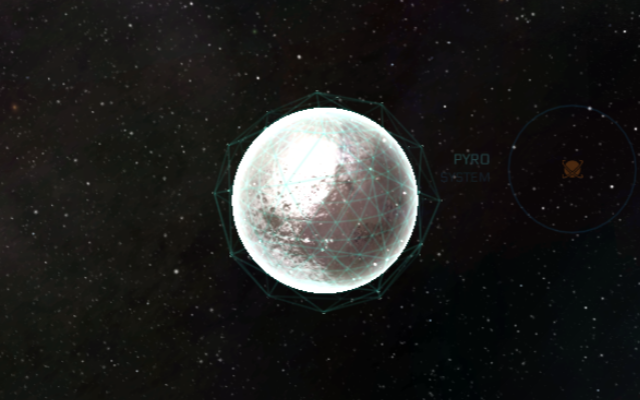
Iapetus (Sol 6e)
Moons
Iapetus (Sol 6e) is a moon of Saturn (Sol VI), United Empire of Earth (UEE). Tidally locked to Saturn, the leading hemisphere of the moon is much darker than that of the trailing hemisphere, giving it a striking two-tone coloration. Dust that has fallen from Saturn's rings over…
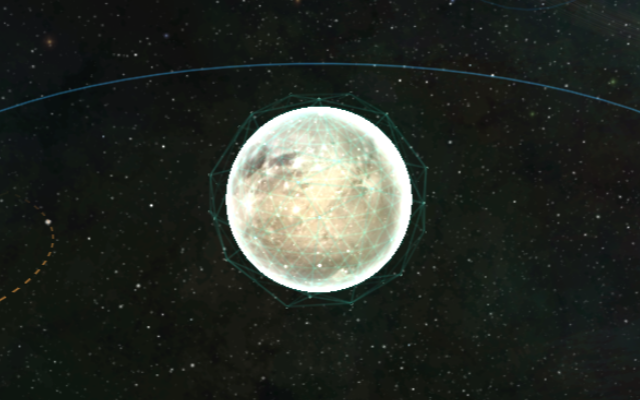
Ganymede (Sol 5c)
Moons
Ganymede (Sol 5c) is a moon of Jupiter (Sol V), United Empire of Earth (UEE). The largest moon in the Sol system, its diameter is greater than that of the planet Mercury (Sol I). Before Ganymede's subsurface ocean was explored in the 25th century SEY, it was popularly speculated…
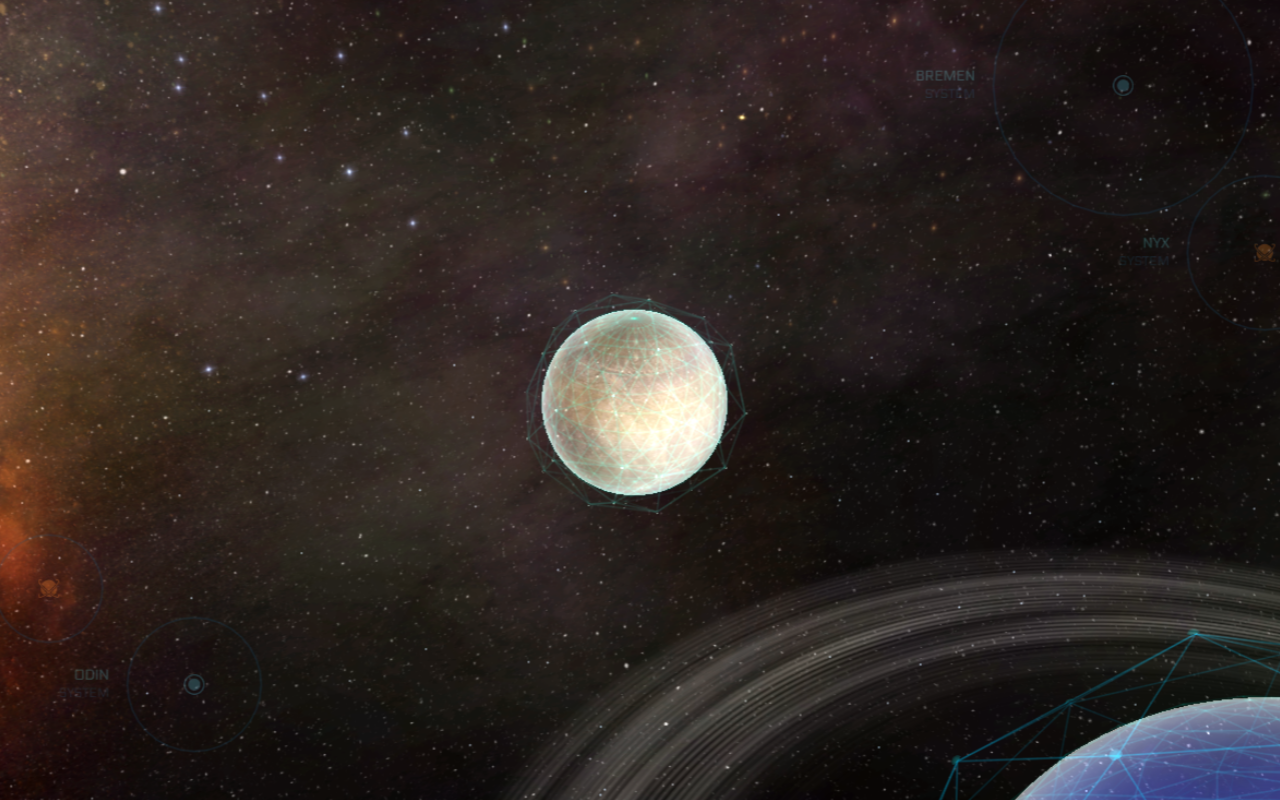
Triton (Sol 8a)
Moons
Triton is a moon of Neptune (Sol VIII), United Empire of Earth (UEE). The largest of Neptune's moons, it the planet's only natural satellite massive enough to have achieved gravitational rounding. Additionally, even though it is a moon, it is larger than all other dwarf planets…
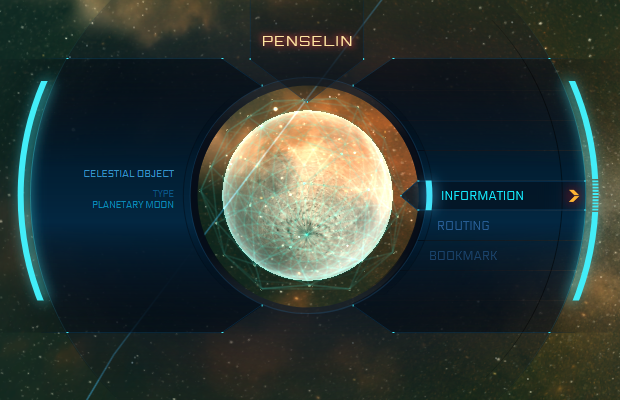
Penselin (Davien 2a)
Moons · Human
Penselin is the moon of Cestulus (Davien II), a planet in the United Empire of Earth (UEE). It was named for Dr. Daniel Penselin, a physicist who died there testing his improvements to the quantum drive. Its radius is only a few meters longer than that of Earth's moon.

Titania (Sol 7d)
Moons
Titania (Sol 7d) is a moon of Uranus (Sol VII), United Empire of Earth (UEE). The largest of Uranus' moons, its surface is scored with enormous canyons and scarps. Under its surface is a mantle of slushy ice that sits over a solid rocky core. It has a tenuous atmosphere of…

Umbriel (Sol 7c)
Moons
Umbriel (Sol 7c) is a moon of Uranus (Sol VII), United Empire of Earth (UEE). One of the darkest in color of the moons of Uranus, one of its larger craters has a ring of reflective material on its floor, making Umbriel appear as if it has a single small eye. Visual artist Tamsa…
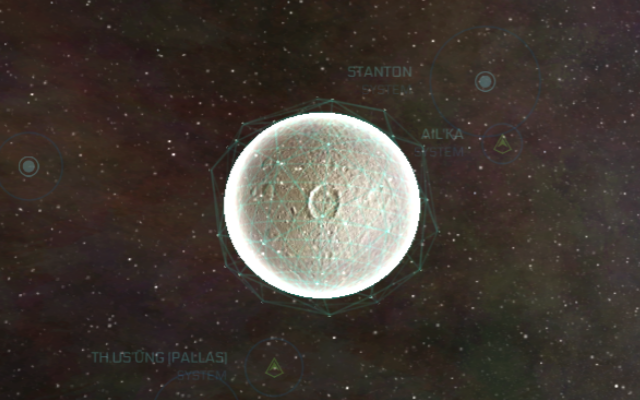
Tethys (Sol 6c)
Moons
Tethys (Sol 6c) is a moon of Saturn (Sol VI), United Empire of Earth (UEE). One of the least dense of all the major moons in the Sol system, it is made almost entirely of water ice. Due to tidal and rotational forces, it is not quite round, taking a slightly elliptical shape.…
Titan (Sol 6a)
Moons
Titan (Sol 6a) is a moon of Saturn (Sol VI), United Empire of Earth (UEE). The largest of Saturn's moons, its nitrogen-methane atmosphere is denser than that of Earth (Sol III). Titan is dotted with lakes and rivers of liquid hydrocarbons, and its climate has created surface…
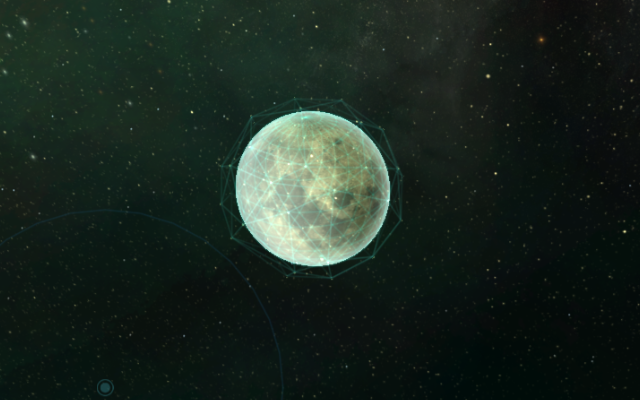
Ellis 5b
Moons
Ellis 5b is the second moon of Noble (Ellis V), United Empire of Earth (UEE), and is tidally locked to the planet. Nearly three times larger than its sister moon Ellis 5a, the light reflected off its pristine white surface is sometimes bright enough that Ellis 5a becomes…
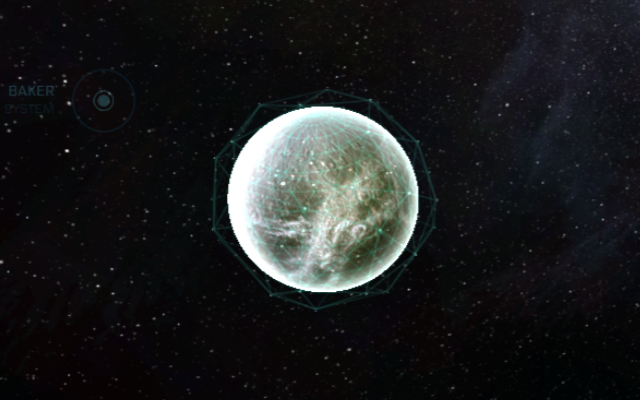
Dione (Sol 6d)
Moons
Dione (Sol 6d) is a moon of Saturn (Sol VI), United Empire of Earth (UEE). Marked with numerous impact craters and chasmata, it is theorized that Dione went through a period of heavy meteor strikes in the distant past that turned the moon 180 degrees on its axis. After the…
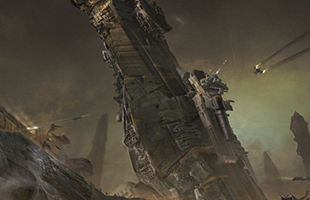
UEES Olympus
Human · Military
The UEES Olympus was a Navy carrier that crash landed on the unclaimed planet Ashana (Nul V) in 2571 while pursuing a group of pirates. After the United Empire of Earth (UEE) government decided against sending in a cleanup crew, a scavenger camp formed among the wreckage. Today,…

Deimos (Sol 4b)
Moons
Deimos (Sol 4b) is the second and farthest moon from the surface of Mars (Sol IV), United Empire of Earth (UEE). At only 6.2 kilometers in diameter, it bears a strong resemblance to an asteroid. One leading theory proposes that it originated as a part of a larger asteroid that…
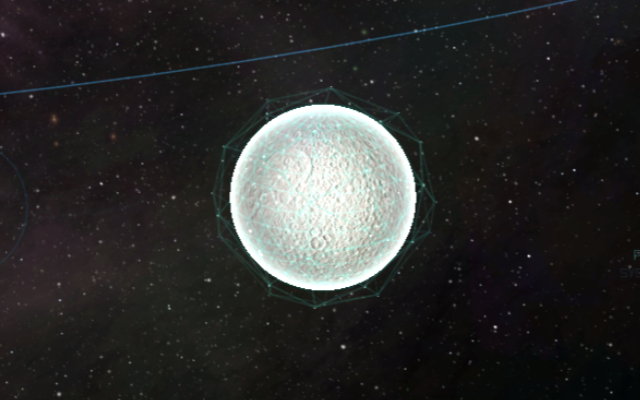
Rhea (Sol 6b)
Moons
Rhea (Sol 6b) is a moon of Saturn (Sol VI), United Empire of Earth (UEE). Composed of water ice and rock, it has numerous high-albedo ice cliffs that appear as streaks on the surface when viewed from space with the naked eye. Although it does experience some endogenic activity…

Oberon (Sol 7e)
Moons
Oberon (Sol 7e) is a moon of Uranus (Sol VII), United Empire of Earth (UEE). Slightly red in color, it likely obtained its hue from the accretion of materials from other parts of the Uranus system. Meteorite impacts have also knocked ice from the surface, leaving dark, non-ice…

Phobos (Sol 4a)
Moons
Phobos (Sol 4a) is the closest moon to Mars (Sol IV), United Empire of Earth (UEE). The larger of the planet's two satellites, it is a non-spheroid object with a jagged surface covered in grooves and streaks. In the next 30 to 50 million years, Phobos will be pulled in by Mars'…
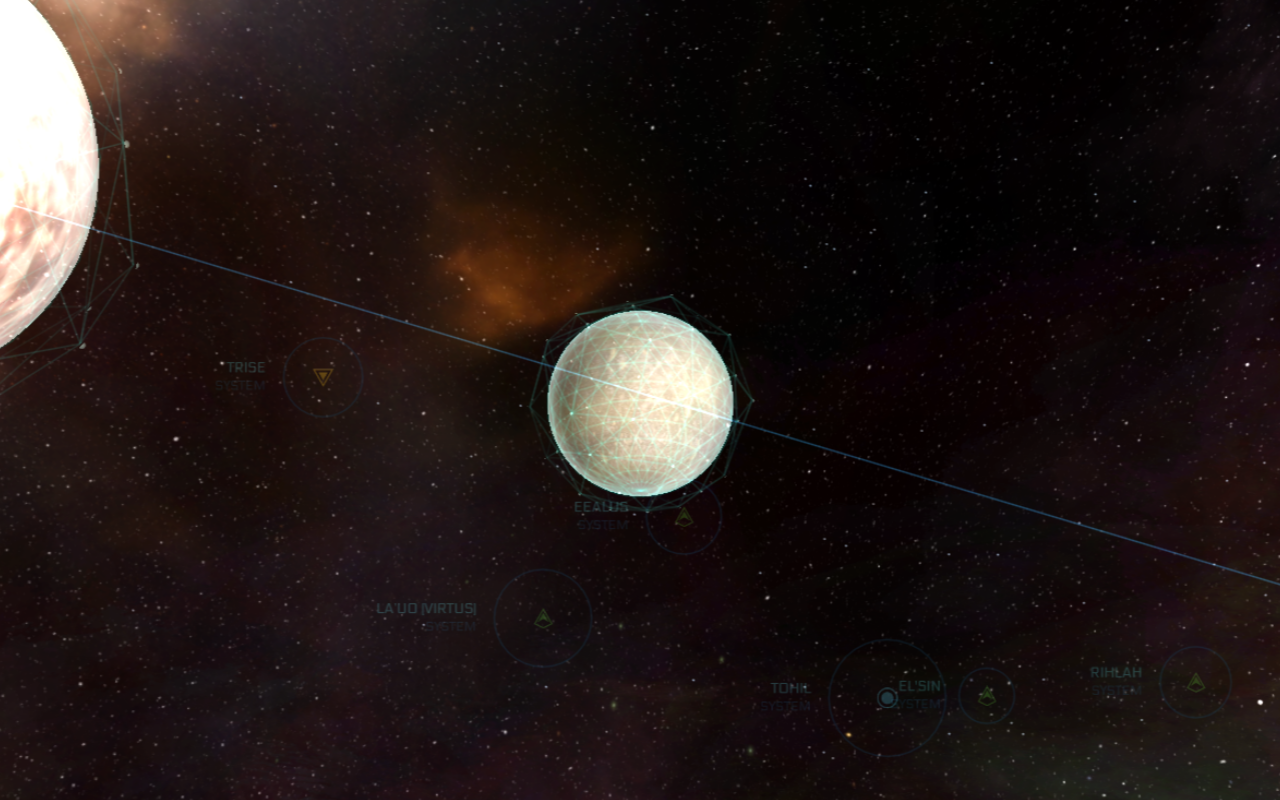
Charon (Sol 9a)
Moons
Charon (Sol 9a) is a moon of Pluto (Sol IX), United Empire of Earth (UEE). The largest of the dwarf planet's five natural satellites, Pluto and Charon are mutually tidally locked to one another and orbit a common barycenter that lies outside Pluto's surface. The two bodies are…
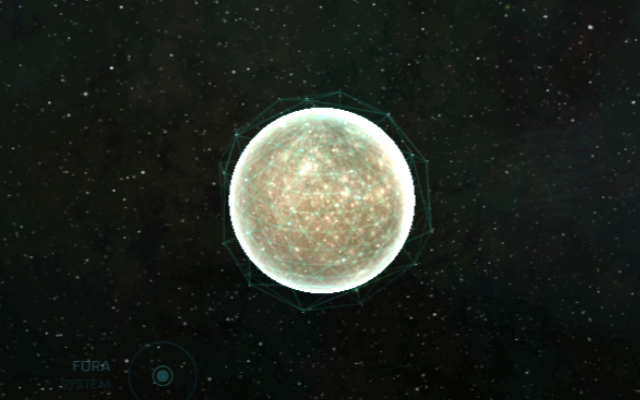
Callisto (Sol 5d)
Moons
Callisto (Sol 5d) is a moon of Jupiter (Sol V), United Empire of Earth (UEE). Of all the celestial bodies in the Sol system, Callisto's surface is the most heavily cratered. Because it has never been geologically active, it is home to multiple sealed settlements and a handful of…
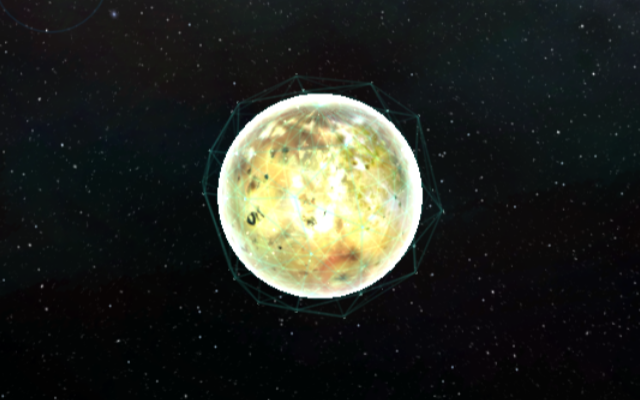
Io (Sol 5a)
Moons
Io (Sol 5a) is a moon of Jupiter (Sol V), United Empire of Earth (UEE). Due to tidal heating and the presence of a subsurface ocean of molten and solid rock, Io is the most geologically active object in the Sol system. Armor manufacturer Caldera utilizes the surface of Io as a…
Source : Galactapedia et starmap de RSI, via l'API du Star Citizen Wiki.
