Developing · Connu
The most advanced primitive species ever discovered by the UEE lives in the Oso System and is a source of endless fascination for scientists. Because the native species is so advanced, the UEE has built Observation Base Chimera to monitor traffic in the system.
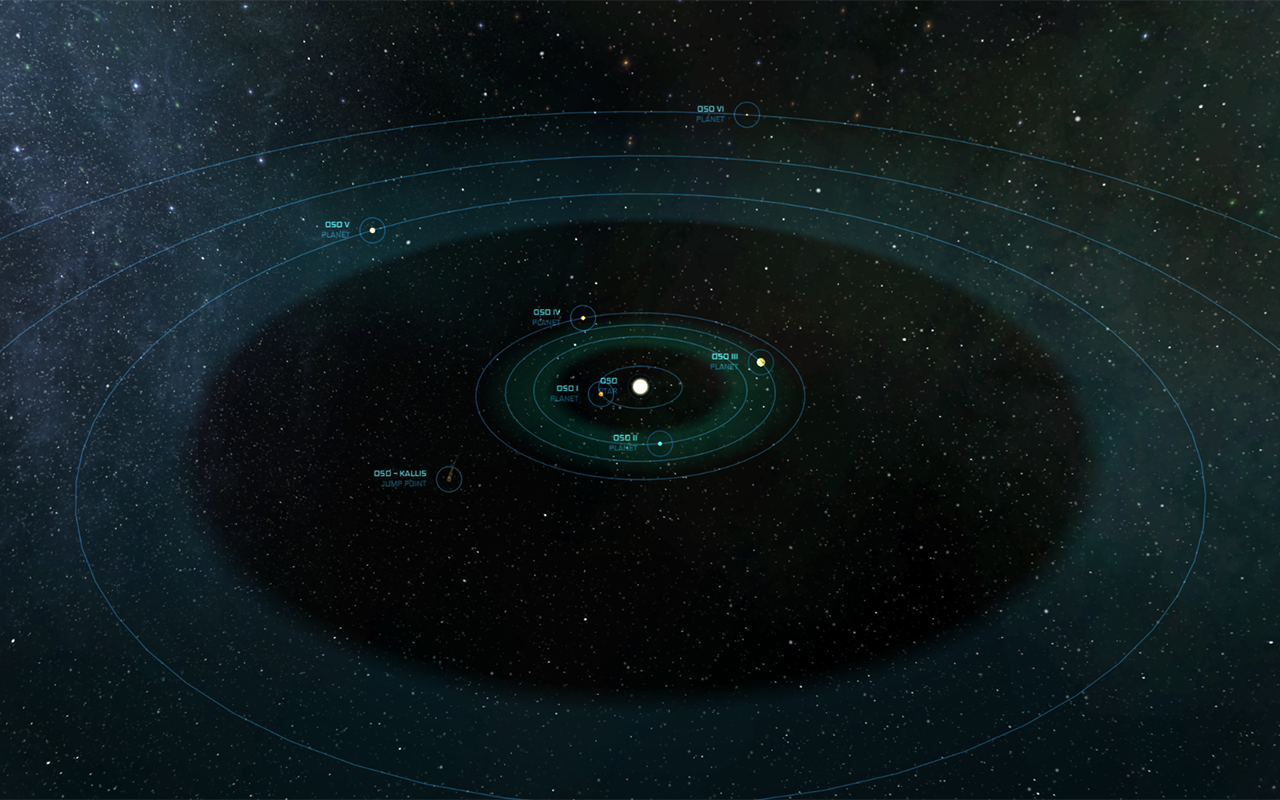
Oso System
Planetary Systems
The Oso system is a Fair Chance Act-protected planetary system that consists of an F-type main sequence star, three terrestrial planets, one gas giant, one ice giant, and one dwarf planet. Discovered in 2861 by amateur explorer Errol Navis, who named it after his daughter, it…
Oso
Main Sequence-Dwarf-F
Oso I
Lava Planet · Developing
This tidally locked planet features a lightside that is a churning sea of lava while its darkside is a cold, stark iron-rich landscape.
Oso II
Terrestrial Rocky · Habitable · Developing
The planet has a lush biosphere and breathable atmosphere that would make it ideal for Human habitation if it weren’t for the discovery of the Osonians. This multi-limbed, primitive creature is one of many unusual species found to inhabit the Fair Chance Act protected world.
Oso III
Gas Giant · Developing
This gas giant is believed to have been a rogue Jupiter that was pulled into orbit around Oso’s star. It is slightly green and white in color due to silicate clouds.
Oso IV
Terrestrial Rocky · Developing
A planet lacking both a core and an atmosphere. While initial scans showed its surface was rich in minerals, recent scans show those reserves much depleted causing speculation that miners have found their way past the UEE patrols in the system.
Oso V
Ice Giant · Developing
An ice giant with a highly lethal atmosphere of ammonia vapor.
Oso VI
Dwarf Planet · Developing
A rocky dwarf planet completely lacking in resources.
Yogi StationOB Chimera
Space Station · Habitable · UEE
Staffed by a rotating military contingent ordered to protect the system from outside interference. A recent Senate report revealed corruption among the staff and portrayed them as being less than diligent about doing their jobs.
Source : Galactapedia et starmap de RSI, via l'API du Star Citizen Wiki.
